Why Most Twitter Growth Services Are Designed to Fail (and the Service That Isn't)

The popular framing on Twitter growth services is that the right one will produce breakthrough results faster and easier than organic effort. The framing is wrong. Most services in the category are structurally designed to produce short-term cosmetic lift and longer-term compression, because that combination maximizes the customer-acquisition flywheel for the service operator. The contrarian read is that the service economics work against the customer, that the rare exceptions run on different economics, and that learning to spot the difference is the most valuable buyer skill in the category.
Cosmetic-service approach: sell short-term follower-count lift, deliver fake or low-quality accounts, collect recurring revenue while the customer churns. Real-service approach: sell durable workflow on official platform access, deliver compounding growth, retain customers because the workflow keeps working. Circleboom runs on Circleboom's verified Enterprise developer access.
→ Open the Twitter growth service workspace
The decision tree below tells you which approach you should actually run.
Why the Service Economics Push Toward Cosmetic
The structural problem in the category is that the cheapest, fastest follower-count delivery method is also the one that produces the worst long-term outcome. SMM panels can deliver 5,000 fake followers for under $100 within three weeks. Real organic growth on the same trajectory takes 6 to 12 months and requires actual content production. The price-to-delivery-speed gap creates an enormous incentive for service operators to cut corners.
Three patterns recur in the cosmetic-service failure mode.
The first is fake-follower delivery. The follower number on the profile climbs; the engagement rate collapses because the new "followers" do not engage; subsequent reach compresses; the customer blames their own content and re-purchases more fake followers. The flywheel works against the customer and for the service operator. The article on why not to buy Twitter followers covers the cost-side math directly.
The second is browser-script automation. Tools that automate follow, like, and DM through click simulation work briefly until X's spam-detection layer flags the account. By the time detection catches up, the customer has already paid the recurring fee for several months.
The third is engagement-pod coordination. Coordinated reciprocal engagement reads as coordinated to the algorithm, which downweights subsequent posts. The customer experiences a 30-day boost and a 60-day plateau and concludes their content needs work, when actually the pod is what the algorithm is reading.
Decision Tree: Which Approach Should You Run?
If you want durable audience growth that converts to business outcomes: pick a service that runs scheduled content, audience hygiene, and cross-platform amplification on official platform access. Evaluate over 90 days, not two weeks.
If you want quick attention with short-term reach: run hot-take threads occasionally on top of a real service. The service produces baseline durability; the hot takes add occasional viral lift.
If you want fast follower-count growth without caring about engagement rate or business outcome: there is no legitimate path. SMM panels, browser scripts, and engagement pods all compress the underlying signal.
If you currently have a cosmetic service running: stop the recurring charge, run a Bot Checker pass to baseline the damage, and start the durable workflow. The recovery period is 4 to 8 weeks.
What the Real Services Specifically Do Differently
The few real services in the category share a structural pattern.
They run on official platform access
Documented Enterprise or partner status with X means the service has access to the same APIs X uses internally. No scraping, no browser scripts, no policy-violating workarounds.
Watch: how the analytics-plus-scheduling workflow runs from one workspace.
They require operator consent for every action
Bulk follow, bulk unfollow, bulk block all require explicit operator approval. No background automation that the operator did not authorize.
They include audience-hygiene tooling
A growth service that does not include bot detection and removal is missing the most important layer. The article on how to remove bot fake inactive ghost Twitter followers covers the cleanup-workflow side.
They cross-post to multiple platforms
Single-platform tools cap growth at the X audience. Real services capture the LinkedIn, Threads, and Bluesky audiences with minimal additional effort.
They publish documented rate limits
Real platform access has rate limits; unlimited bulk operations means the service is bypassing them.
The three structural layers (cadence, hygiene, amplification) compose into compounding growth that real services can deliver and cosmetic services cannot.
Why the Cosmetic Hacks Specifically Fail
Each common cosmetic shortcut has a specific failure mode worth understanding.
Buying followers fails because the new accounts do not engage, which compresses the engagement rate, which compresses reach. Browser-script automation fails because X's automation detection has matured. Engagement pods fail because coordinated engagement looks like coordinated engagement to the spam-detection layer. SMM panels fail because the source accounts get purged on a 30-to-90-day cycle.
The article on how to spot fake Twitter followers covers the diagnostic side, and the article on how to block fake followers on Twitter X covers the cleanup workflow.
What the Real Service Approach Actually Looks Like
The setup runs from one Circleboom dashboard.
Open the workspace
- Log in to Circleboom Twitter and connect your X account through OAuth.
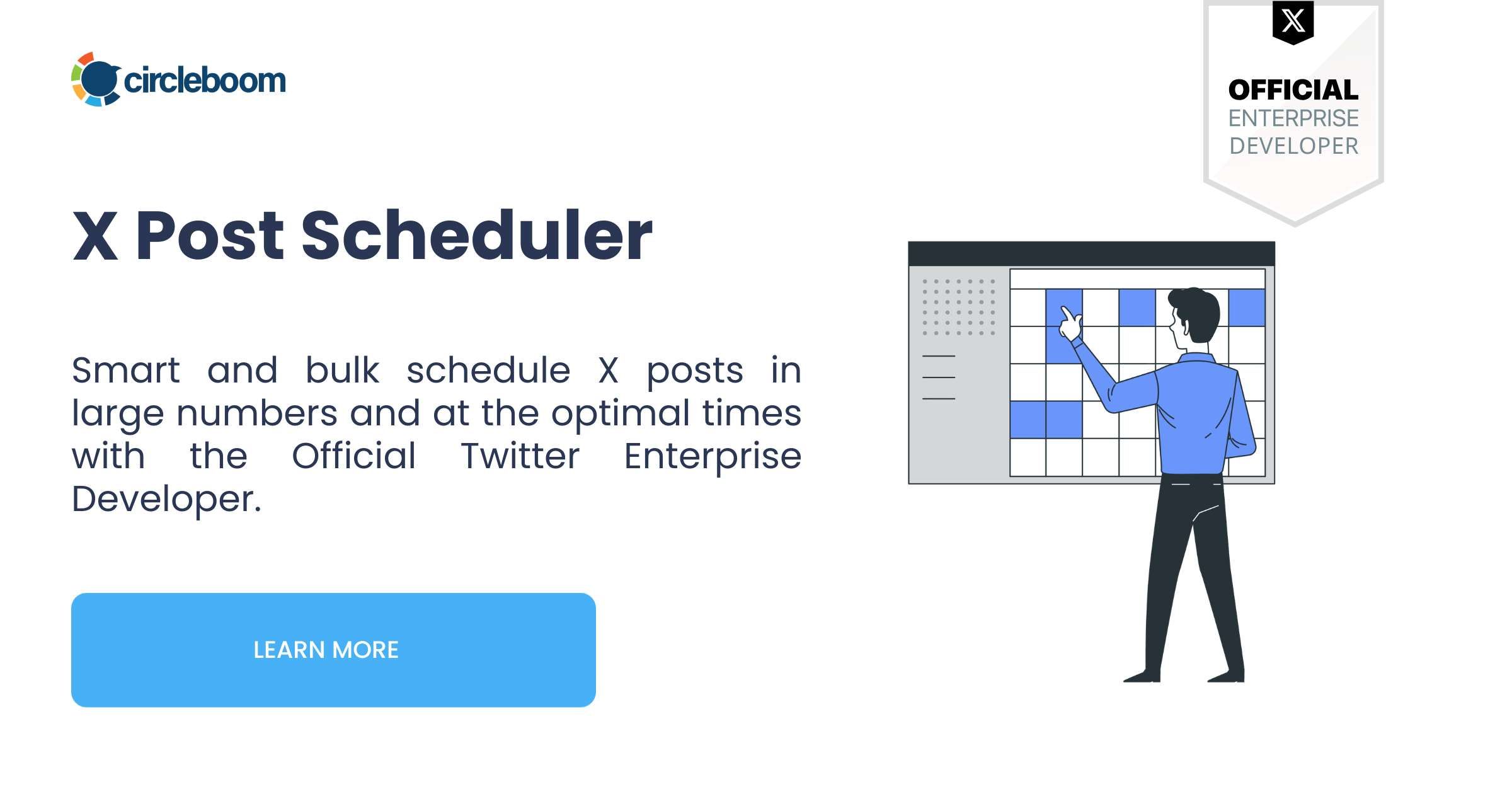
- Navigate to the X Post Planner menu for the scheduling workspace.
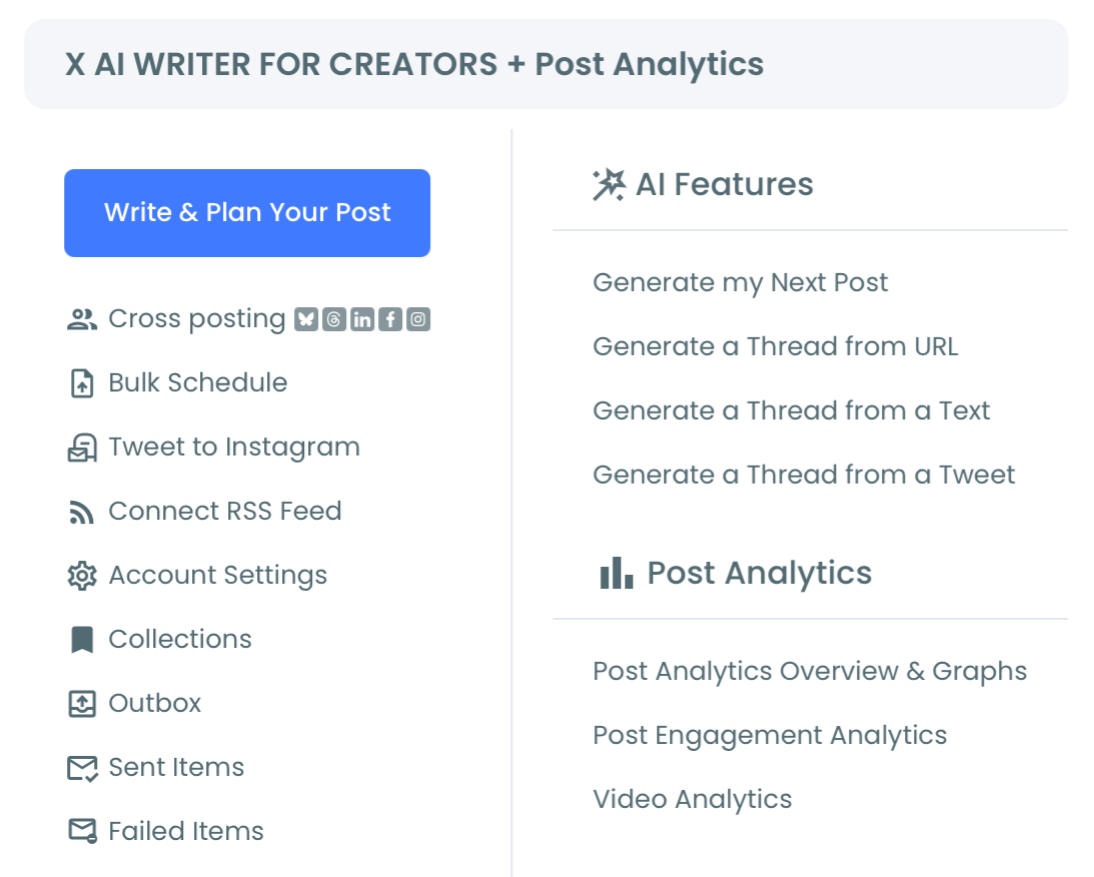
- Build a 14-day Bulk Schedule queue with hook-plus-link-tweet-2 threads.
Run hygiene
- Run the Bot Checker monthly and remove flagged accounts in paced batches.
Run amplification
- Cross-post to LinkedIn, Threads, and Bluesky for every thread.
- Auto Retweet top performers for time-zone amplification.
That order is what makes the real-service approach durable. The three layers compose without operator workflow overhead.
What to Do This Week
If you are currently paying for a cosmetic service: stop the recurring charge. The follower-count damage will take 4 to 8 weeks to recover from; the recovery starts the day the cosmetic service stops adding to the damage.
If you have not started any growth service: skip the cosmetic-service learning curve and start with a real service on day one. The opportunity cost of trying cosmetic services first is the months of compounding the real service would have produced. The article on how to organically grow Twitter followers covers the workflow side.
If you are running a real service but plateaued: check whether all three layers (cadence, hygiene, amplification) are actually running. The most common plateau pattern is operators running the content engine and skipping hygiene or amplification.
Wrapping Up
The contrarian read on Twitter growth services in 2026 is that most of the category is structurally designed to fail the customer, that a small subset runs on different economics, and that learning to spot the difference is the most valuable buyer skill. The Circleboom workflow runs the three real layers on one dashboard, on the same Enterprise-tier access X uses internally.
→ Run the real Twitter growth service workflow
Common Questions About Growth Services
Are any cosmetic services worth running?
No. The structural problem is that they trade short-term lift for long-term compression. Even if the lift were free, the compression would not be worth it; the lift is not free.
How long until a real service produces visible results?
Initial lift at 4 to 6 weeks; meaningful compounding at 90 to 180 days. Plan for a quarter, not a week.
Can I run a real service alongside an existing cosmetic one?
The cosmetic service will keep producing the compression that the real service is trying to reverse. Stop the cosmetic charge first, then let the real service run.
Is the Circleboom workflow safe under X's rules?
Yes. All layers run through Circleboom's Enterprise developer access. No scraping, no browser scripts, no automation outside platform policy.