
Why B2B Twitter Ads Underperform LinkedIn (and How to Close the Gap)

The popular framing on B2B Twitter ads in 2026 is that the channel underperforms LinkedIn structurally and should be cut from most B2B media plans. The framing is half-right. Paid-only Twitter ads do underperform LinkedIn for B2B; layered paid plus organic Twitter ads produce competitive economics. The difference is operational, not platform-fundamental.
Paid-only: $150+ CAC, channel cut after six months. Layered: $50 to $80 CAC, sustainable contribution, on Circleboom's Enterprise developer access.
→ Open the layered B2B workflow
The decision tree below tells you which configuration to run.
Why Paid-Only Underperforms
Three structural reasons.
LinkedIn's professional graph provides built-in context (job title, company, industry visible in the ad itself). Twitter's ad platform reaches accounts demographically but without the same professional context attached. The article on maximizing ROI with B2B lead generation campaigns covers the channel-context dynamics.
Search ads on Google reach intent-driven queries. Twitter ads reach passive feed-scrollers. The intent gap produces a conversion-rate gap.
Twitter's audience tilts more consumer than LinkedIn's audience. The B2B subset on Twitter exists but requires precise targeting.
Decision Tree: Which Configuration?
If you have monthly budget under $5K: skip Twitter for B2B. The cold-start economics make paid-only uncompetitive.
If you have $5K to $25K monthly: run the layered configuration. The organic track produces audience-warming; paid scales the engagement.
If you have $25K+ monthly: layered configuration with multiple engagement-amplifiers.
If you cannot commit to organic engagement: do not run paid Twitter for B2B.
What Layering Does Differently
Three operational decisions change.
The audience definition is shared between organic and paid.
The engagement happens before the paid impression.
The retargeting is built from organic signals.
Watch: how Find Influencers ranks B2B prospects.
https://www.youtube.com/watch?v=hS1AplA1Whg
The combined effect produces 2x to 4x conversion lift over paid-only.
How the Workflow Runs
The flow, in order.
Open the workspace
- Log in to Circleboom Twitter and connect through OAuth.
- Navigate to the Advanced X Search menu.
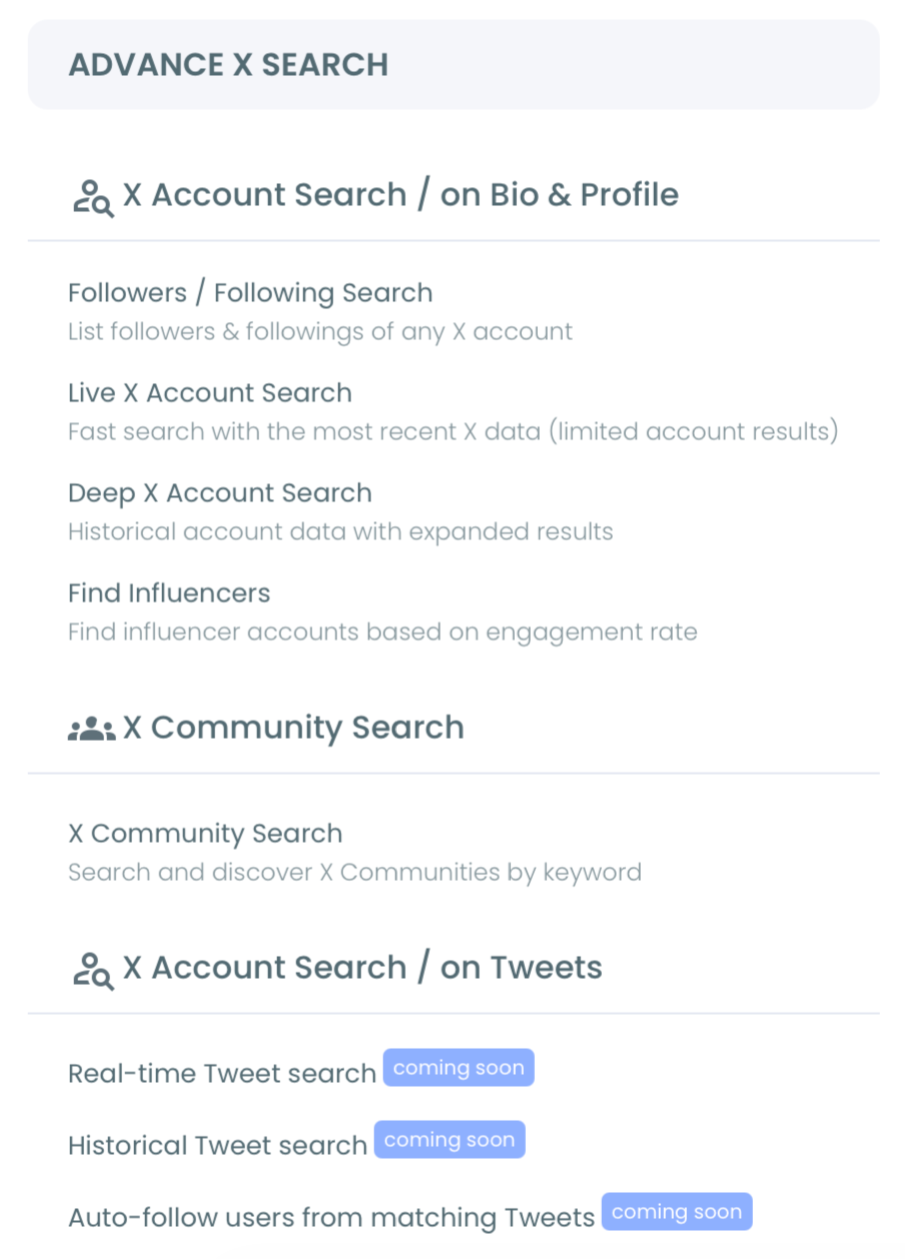
- Run Find Influencers with B2B ICP keywords.
Build engagement
- Tier and engage the top-priority accounts.
Layer paid
- Open X Ads Manager targeting the same ICP.
- Build retargeting audiences from organic signals.
That order produces the layered workflow.
What This Means for B2B Media Plans
For most B2B teams, Twitter is a secondary channel that contributes 20% to 40% of total social pipeline once the layered approach matures. The article on your most engaging followers on Twitter covers the engagement-side dynamics.
LinkedIn typically remains the primary channel; Twitter adds reach, audience diversity, and engagement-driven trust signals.
What to Do This Week
If running paid-only and considering channel cut: pause paid, run organic engagement for 60 days, resume paid.
If considering Twitter for B2B: set up both tracks on day one.
If running Twitter and LinkedIn together: align ICP keywords across both for cross-channel learnings.
Wrapping Up
The contrarian read on B2B Twitter ads is that paid-only underperforms but layered competes with LinkedIn at most budget levels. The operational fix is structural, not creative.
→ Run the layered B2B workflow now
Common Questions About B2B Twitter Strategy
Will Twitter eventually replace LinkedIn for B2B?
For most B2B, no. LinkedIn's structural advantages are durable. Twitter is a useful additional channel.
Can I run the workflow with limited team capacity?
Yes, at smaller scale. The engagement-amplifier role can be 0.25 FTE for small budgets.
Does the approach work for B2B services beyond SaaS and consulting?
Yes. The framework generalizes; keyword sets adjust per category.
Is the workflow safe under X's rules?
Yes. Organic runs through Circleboom's Enterprise developer access; paid runs in X Ads Manager.