How I Started Tracking Who Stopped Following Me on Twitter

I used to ignore the drop. The follower count would tick down by 4 or 6 every couple of days, and I would close the tab and write it off as platform noise. That worked until I tried to attribute a six-week engagement slump to anything specific. Nothing in my analytics dashboard showed me who had left, when they had left, or what their accounts looked like before they did.
Can you actually see who stopped following you on Twitter?
Yes, and the workflow is faster than scrolling your follower list. Circleboom snapshots your followers daily as an official X Enterprise Developer company, then shows every unfollow as a dated, profiled event you can act on or export.
→ Track who stopped following me on Twitter
The Six-Week Slump I Could Not Explain
The slump was the kind every working operator pretends is not happening. Impressions down about 30 percent. Replies down sharper than that. The follower line on the dashboard was nearly flat, which made the whole thing harder to argue with, because the number that ownership cared about was holding steady.
I knew the surface number was hiding something. New followers were still arriving, and old ones were leaving at roughly the same rate, which is what kept the line flat. The only way to act on the slump was to understand who was leaving and whether it correlated to anything specific I had been posting.
The platform offered nothing for this. Twitter has never shipped a native unfollower tracker, and even the audience-insights side of the product outside of the platform stops at aggregates. I needed dated events with profile context, and I needed them automatically because I was not going to diff follower lists by hand.
The Failed Manual Attempt
The first thing I tried was the obvious one. I exported my follower list to a spreadsheet on a Friday, did it again the following Friday, and tried to diff the two by username.
That worked for exactly one week. Then I forgot to do it. Then I did it three weeks later and the diff was useless because too many things had moved in too many directions to attribute anything to anything. The spreadsheet approach also failed silently in another way: I had no profile context for the people who had left. I had usernames, and usernames alone do not tell you whether a leaver was an established peer or a brand-new spam account that the platform was about to suspend anyway.
That is the deeper issue with manual unfollow tracking. The data you really want is not just "X left." It is "X left on this date, looked like this, had this much overlap with my topic graph, and probably reacted to that thing I posted on day 23." You cannot build that from a Friday spreadsheet.
That gap is what pushed me toward Circleboom's full unfollower tracking workflow, where the snapshots run on a schedule and the profile context is preserved for each leaver.
How I Finally Started Tracking Unfollows on Twitter
The workflow I use now is the one I should have started with. Three settings and the system handles the rest.
Connect the account once
- Log in to Circleboom Twitter and authorize the X account with official OAuth. The snapshot loop starts the moment the account is connected.
Open the audience-insights menu
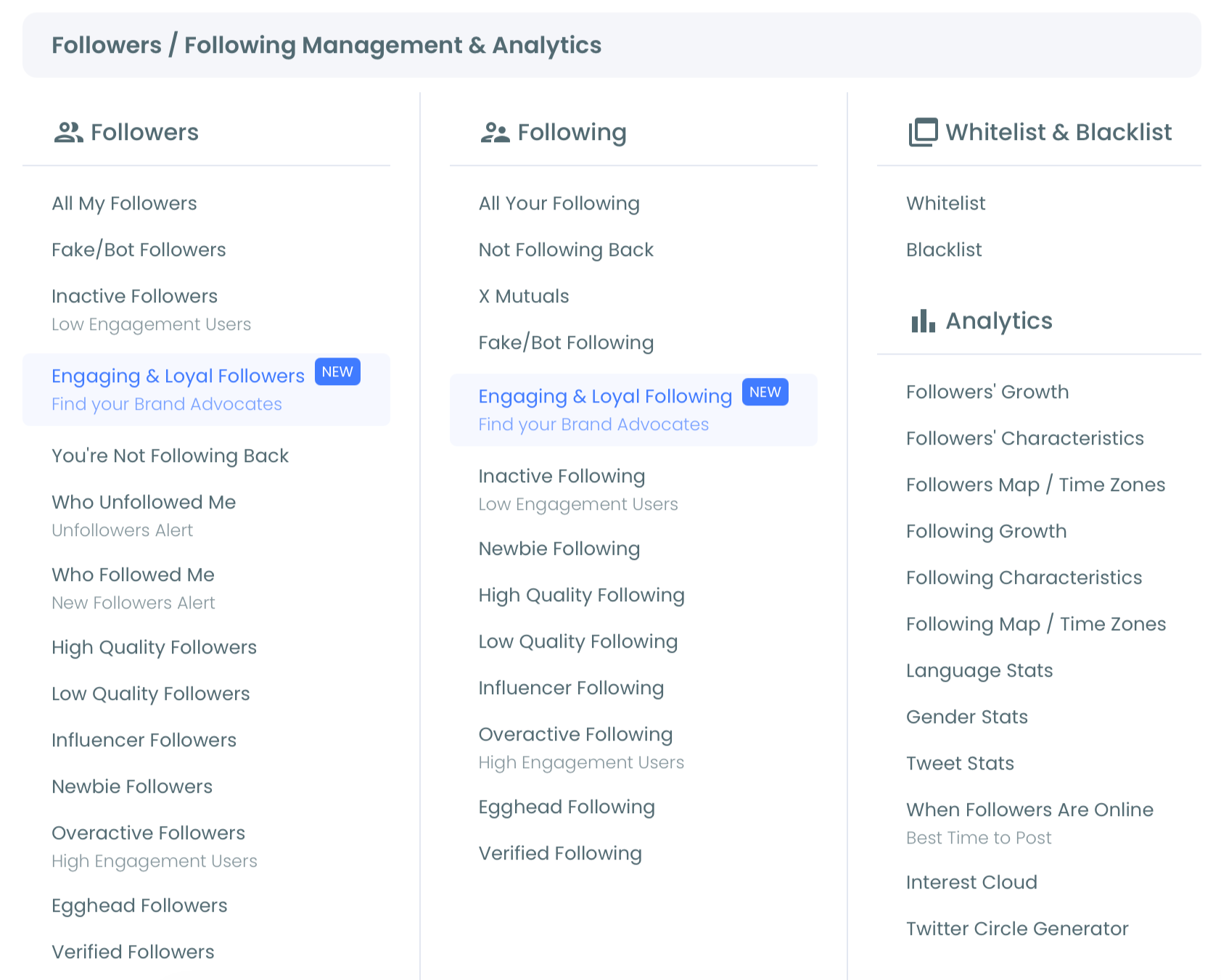
- Open the Follower / Following Management and Analytics menu and click the Who Unfollowed Me section.
Turn on the alert and pick a cadence
- Open the alerts panel and choose daily or weekly email summaries. The summary lands in your inbox with the new unfollows since the last alert, profile context attached.
That sequence is what makes it stick for me. The login earns sanctioned API access, the menu narrows scope, and the alert turns the whole thing into passive tracking so I never have to remember to check it. The day I stopped relying on memory was the day the data actually started informing decisions.
See it live: how the dated unfollower table renders for a real account that was leaking audience without realizing it.
What the Dated Data Changed
The first useful thing the tracker showed me was that my unfollows were not random. About 40 percent of them clustered on dates that lined up with one specific posting pattern I had picked up in the slump weeks: long opinion threads at the end of the workday. Once I had names attached to dates, the pattern was visible inside two scrolls of the table.
The second useful thing was the composition. About a third of the unfollows came from low-quality accounts that the platform itself probably would have rolled up anyway. Another third came from accounts that had followed me in some unrelated boost a year earlier and were churning out of every account they had passively followed. The final third was the one that mattered: established profiles with strong overlap with my topic graph, leaving on dates I could trace.
That last third is what I built the next content adjustment around. I shortened the threads, changed the posting window, and watched the leaving rate from that account profile drop within three weeks. None of that decision would have been possible without dated, profiled events.
There is one realization that surprised me, and it is the part I would not have expected to write. Unfollows are usually treated as failure, but most of the operators I now compare notes with use them as the cleanest feedback loop the platform offers. Likes and replies have positive bias built in. Unfollows are the only metric where the audience has to actively decide to leave, which makes them unusually honest about what is not working.
Circleboom runs all of this against official X platform limits, so the tracker stays safe to leave running. The same dashboard surfaces a not following back view and a new follower checker so you can see gains and losses in the same place. Pew Research's broader picture of US Twitter users puts the scale of follower volume in context: at the audience sizes most active accounts carry, manual tracking is not viable.
See who unfollowed me on Twitter is the page I now open whenever the count dips. The whole experience takes 30 seconds, which is the only reason I actually do it.
Related Circleboom reading that goes deeper on adjacent threads:
- how to know who unfollowed you on Twitter covers the basic detection question.
- how to track Twitter unfollowers on iPhone for the mobile-first version of the workflow.
- Twitter follower trackers compares the broader tracker landscape.
- find who is not following back on Twitter for the parallel "not reciprocating" view.
Still Wondering?
Why does Twitter not tell you who unfollowed?
Twitter has never offered native unfollower notifications. The platform treats unfollows as private events, which is the gap third-party trackers fill. Circleboom solves it with scheduled snapshots that diff your follower list and surface every leaver as a dated event.
Do unfollows always mean my content was bad?
No. Many unfollows are platform-side cleanup, follow-churn from old boosts, or leavers from unrelated audience cohorts. What matters is the dated pattern: clusters of established-profile leavers on specific dates are signal. Single random unfollows are usually noise.
How quickly can I act on a new unfollow?
If you have alerts enabled, you can act on a new unfollow within hours of it showing up in your inbox. The dashboard supports unfollow-back, export, and individual review directly from the same table.
What happens to unfollows that happened before I started tracking?
They are not recoverable. The snapshot loop only sees events that occur after your account is first connected to Circleboom, so the longer the tracker has been running, the deeper your usable history will be.
The Habit That Stuck
The habit that finally stuck for me was the weekly inbox alert. I do not log in to check anything. I open the email on a free moment, scan the new unfollows for any cluster that lines up with something I posted, and move on with my week.
If you wait, the cost is the cost I paid: a six-week slump you cannot attribute to anything, and a follower number that hides the actual story underneath. The fix is the smallest commitment in the workflow. The snapshot starts the moment the account is connected, and from there it runs without you.
Watch who stops following me on Twitter and the next slump that arrives will come with names, dates, and enough context to actually do something about it.