
Available Marketplaces for Your Business: A Practical Overview
Choosing where to sell is one of the first real strategy decisions a business makes. Here is a practical breakdown of the major online marketplaces, what each one actually costs, and how to match your product to the right audience.

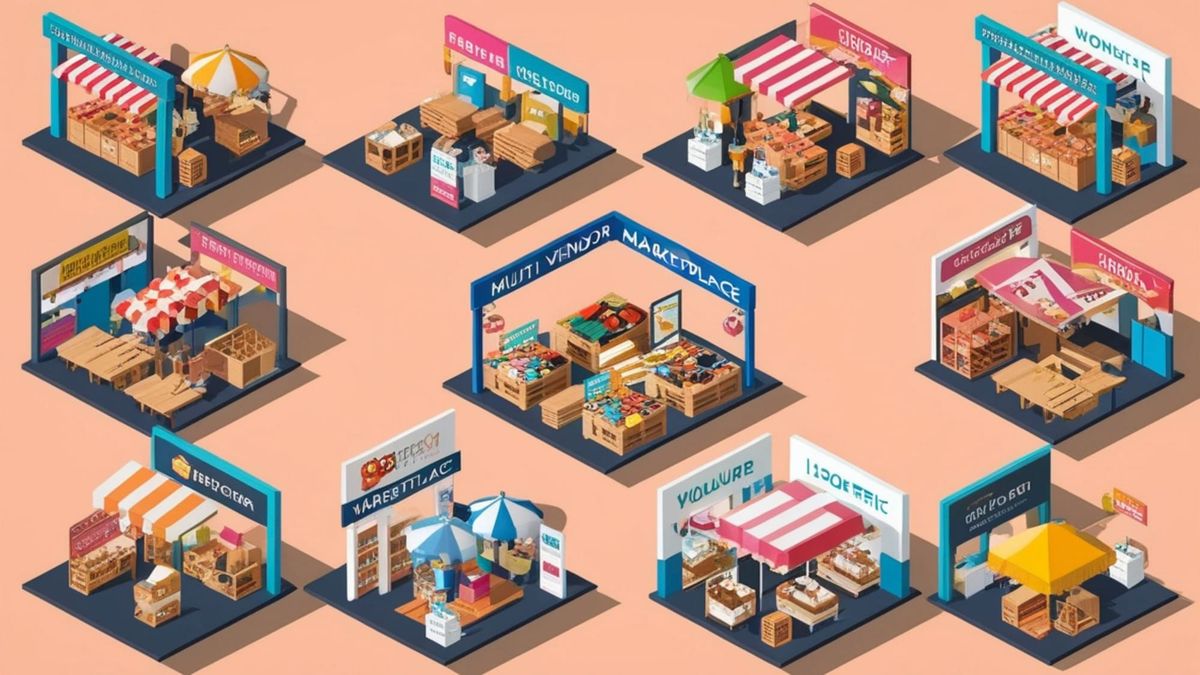
Picking where to sell is one of the first real strategy decisions a business makes, and it is easy to get wrong. Listing everywhere at once spreads a small team too thin. Picking the wrong single marketplace means paying fees for reach that never quite matches your product. A clearer picture of what each major marketplace actually offers makes that decision a lot less risky.
What Are the Main Online Marketplaces Available for Businesses?
The main marketplaces available to most businesses are Amazon, eBay, Etsy, Walmart Marketplace, Facebook Marketplace, and TikTok Shop, each suited to a different product type and audience. Amazon and Walmart favor high volume, standardized products. Etsy fits handmade and custom goods. TikTok Shop and Facebook Marketplace favor trend driven and locally relevant products. The right choice depends far more on your product category than on which marketplace is simply the largest.
Marketplace Selection IS vs. IS NOT
Marketplace selection IS: matching your specific product type, price point, and fulfillment capacity to the marketplace whose audience and fee structure fit best.
Marketplace selection IS NOT: picking the single biggest platform by user count and assuming size alone guarantees sales. A smaller marketplace with the right audience often converts better than a massive one with the wrong one.
TABLE OF CONTENTS
- Why Marketplace Choice Matters More Than It Seems
- Amazon: Scale and Trust, at a Cost
- Etsy: The Home for Handmade and Custom Goods
- eBay: Reach Without the Amazon Fee Structure
- Walmart Marketplace: Lower Fees, Growing Fast
- TikTok Shop and Facebook Marketplace: Trend and Local Reach
- How to Actually Choose Between Them
- FAQ
- Conclusion
Why Marketplace Choice Matters More Than It Seems
Third party marketplace sales are projected to reach $3.2 trillion across the top 100 marketplaces, a 10% increase year over year, which tells you two things at once. The opportunity is real and growing, and competition inside each marketplace is growing right along with it.
Every marketplace comes with a different fee structure, a different built in audience, and different expectations around fulfillment speed and customer service. Choosing based on brand recognition alone, rather than fit, is one of the most common and most expensive mistakes new sellers make.
Amazon: Scale and Trust, at a Cost
Amazon remains the largest marketplace by gross merchandise value, approaching $800 billion in 2024, and it comes with a level of buyer trust that is hard to replicate anywhere else. For standardized products with clear demand, that scale is genuinely hard to beat.
The tradeoff is cost and competition. Between the $39.99 monthly professional plan, category referral fees, and the sheer number of sellers competing for the same buyers, margins on Amazon can get thin fast, especially in crowded categories. It tends to work best for businesses with efficient fulfillment and pricing that can absorb the fee structure.
Etsy: The Home for Handmade and Custom Goods
Etsy has grown its active buyer base to roughly 95 million, nearly double what it was in 2019, and that growth has come specifically from buyers looking for handmade, vintage, and custom products. Its fee structure, a $0.20 listing fee plus a 6.5% transaction fee, is straightforward compared to Amazon's category dependent system.
The audience fit matters more here than almost anywhere else. A mass produced, generic product will underperform on Etsy regardless of price, because buyers are specifically there looking for something that does not feel mass produced.
eBay: Reach Without the Amazon Fee Structure
eBay's 134 million active buyers and 2.4 billion live listings make it one of the largest marketplaces by sheer reach, with a fee structure that is often more forgiving than Amazon's, particularly for sellers using its free monthly listing allocation. Its auction format also gives sellers a pricing option that most other marketplaces do not offer.
It works particularly well for used, refurbished, collectible, or unique inventory, categories where Amazon's newer product bias puts sellers at a disadvantage.
Walmart Marketplace: Lower Fees, Growing Fast
Walmart Marketplace has been growing quickly, with its Target Plus equivalent program already reaching $1 billion in sales and targeting $5 billion within five years, a sign of how fast third party marketplace attach to big box retail is scaling. Referral fees generally run lower than Amazon's for comparable categories.
The catch is a more selective approval process and a smaller, though rapidly growing, buyer base than Amazon. It suits sellers who already have Amazon experience and want a lower fee second channel rather than a first marketplace.
TikTok Shop and Facebook Marketplace: Trend and Local Reach
TikTok Shop, backed by a platform with 1.37 billion active users, is built around discovery through content rather than search, which makes it a strong fit for visually compelling, trend responsive products. Its 6% US commission is competitive, but success depends heavily on content, not just listings.
Facebook Marketplace works differently again, leaning into local, often free listings with a 10% fee only applying to shipped orders. For businesses with a local or regional customer base, it offers reach with minimal upfront cost, though it lacks the discovery mechanics that make TikTok Shop effective for reaching new audiences at scale.
How to Actually Choose Between Them
Start with your product category, not the marketplace's size. A handmade product belongs on Etsy before it belongs on Amazon, regardless of Amazon's reach, because buyer intent on Etsy already matches what you are selling.
Next, run the fee structure against your actual margins before committing, not after your first sales come in. A 15% marketplace commission that looks small on paper can be the difference between a profitable and unprofitable product line depending on your cost base.
This guide on how to choose the right marketplace for your business walks through this decision in more detail, including how to weigh audience fit against fee structure for different product categories, which is a useful next step once you have narrowed your options to two or three.
Most established sellers eventually operate on more than one marketplace, but they get there by proving a product works on one platform first, then expanding deliberately rather than launching everywhere simultaneously.
FAQ
Which marketplace is best for a new small business? It depends entirely on product type. Handmade or custom goods generally do best starting on Etsy, standardized products with clear demand do well on Amazon, and locally relevant products often do well on Facebook Marketplace first.
Is it better to sell on one marketplace or several at once? Most successful sellers start with one marketplace, prove the product works, then expand deliberately. Spreading a small team across several marketplaces from day one often means doing all of them poorly.
Which marketplace has the lowest fees? Facebook Marketplace is free for local listings, and Walmart Marketplace generally runs lower referral fees than Amazon for comparable categories, though exact costs vary significantly by product category.
Do I need a different strategy for each marketplace? Yes, generally. Each marketplace has a different audience and discovery mechanism, so listings, pricing, and even product photography often need to be adapted rather than copied across platforms unchanged.
Is TikTok Shop worth it for a traditional retail product? It depends on whether the product photographs and demonstrates well in short video. TikTok Shop rewards visually engaging, trend responsive products more than it rewards traditional, purely functional listings.
Conclusion
The right marketplace is the one that matches your product and audience, not simply the one with the most users. Narrow your options based on category fit and fee structure before you commit.